CSU is using a legal loophole to claw back contractual raises. Union members want to change that.
California State University workers with Teamsters Local 2010 struck in 2023 to win yearly raises for their workers. CSU claims they can't pay it. A new bill is trying to change that.

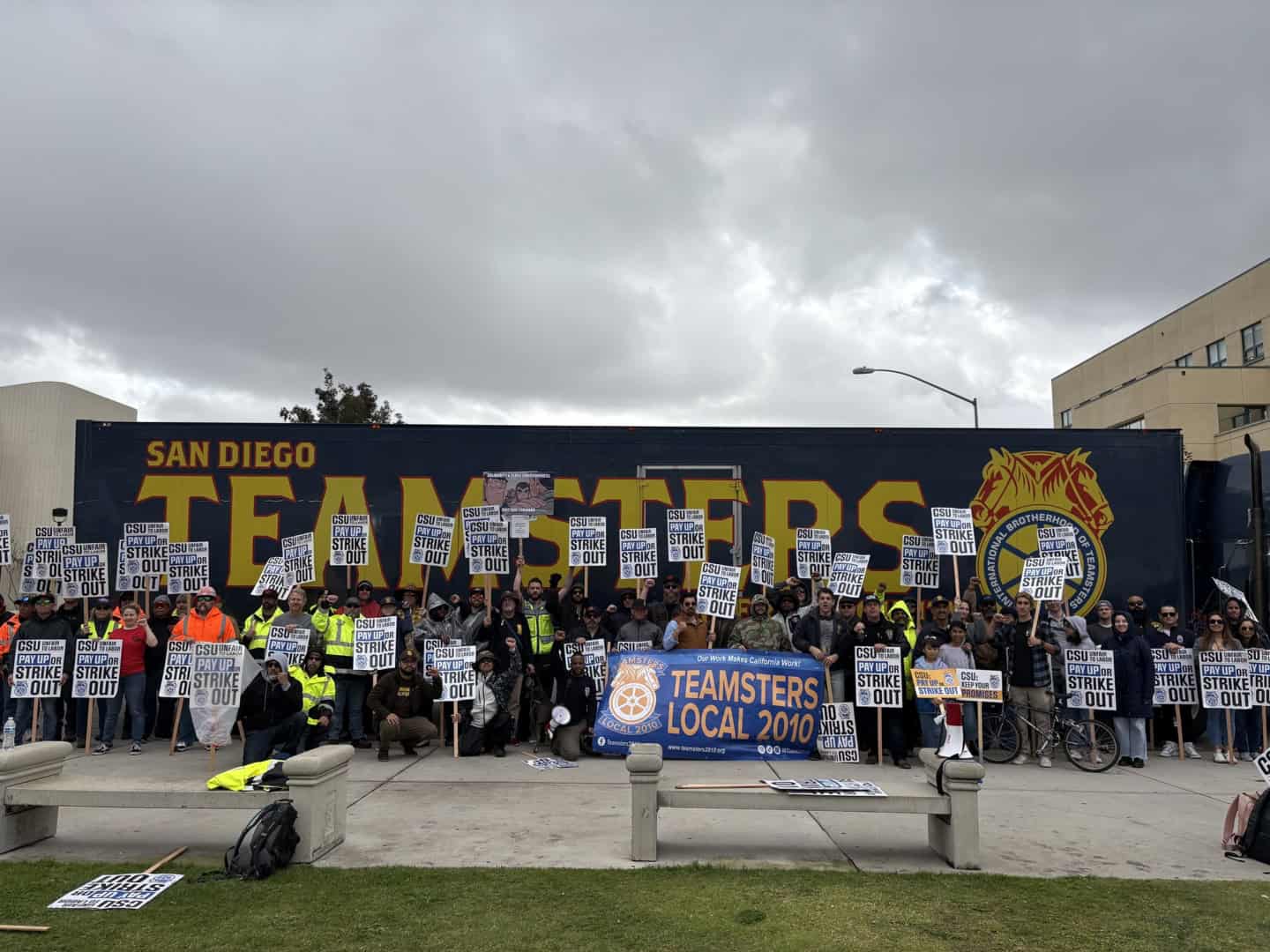
On March 19, a bill seeking to close a legal loophole and protect California State University workers cleared another hurdle toward becoming law. Members of Teamsters local 2010 testified ahead of the bill's advancement in front of the California State Assembly Committee on Public Employment and Retirement in support of AB 1818, a bill that would protect skilled trades workers at California State University by requiring the university to pay their contractually-obligated raises. The bill now heads to the Assembly Appropriations Committee for review.
Introduced in February by Assembly Labor Committee Chair Liz Ortega, the bill seeks to close a loophole in established state labor law that CSU exploited in order to avoid paying workers their contractually agreed-upon raises. “In 2025, CSU failed to honor and implement contractual raises with Teamsters Local 2010 and other unions, despite receiving full funding from the legislature,” said Teamsters Local 2010 Secretary Treasurer Jason Rabinowitz in a release last week. “Their actions caused real hardship for families, and also resulted in the Teamsters being forced to wage an unprecedented week-long strike across the system, significantly disrupting services to the students and the state."
According to the union, which represents 1,100 skilled trades workers on CSU campuses statewide, the main issue at the heart of the dispute is a provision within the Higher Education Employer-Employee Relations Act (HEERA), which currently allows CSU to reopen contracts and refuse to honor agreements whenever it claims the state has provided it with insufficient funding. According to recent reporting from William Melhado at the Sacramento Bee, "Instead of awarding the salary increases, the CSU offered one-time raises due to the budget constraints. CSU accepted a $144 million zero-interest loan from the state that must be repaid by July 2026 to help cover salary expenses, including bonuses for university employees." CSU Teamsters found that unacceptable—they struck in 2023 to secure those raises.
Ernesto Torres, Vice President of Teamsters Local 2010, testified in front of the committee last week in support of the bill. He said that this legislation is one of the only remaining ways that the union can get CSU to honor their contracts. "We just went on strike February 17 to bring awareness to the public that this is the way that these people are treating us," he told Words About Work. "We've run out of options and we're like, you know what? We need to move forward and run some bills and see if we can make some movement there. It's just not fair the way they're treating the working class; there's always money for them but not for us."
The university's claims that they are unable to pay what is contractually owed to the workers has fallen short, according to the union. "Governor Newsom’s proposed 2026–27 budget provides CSU with a 5% base funding increase totaling $365.7 million in new, ongoing funding. By CSU’s own estimates, paying the July 2025 raises owed to CSU Teamsters would cost roughly 1% of the proposed funding increase," the union said in their statement. "Additionally, enrollment gains, annual tuition hikes of 6%, substantial financial reserves, and padding executive pay further call into question CSU’s justification for withholding raises." The union released a fact-finding report authored by a state Fact Finder that supports these claims.
Torres called attention to the regular granting of university president pay raises as an issue that CSU seems unwilling to acknowledge. "For them, there's no contingency. For them, it doesn't matter if there's a state budget or not. They get their raises," he said, referring to university executives. "Yet when the working class has their contracts, they don't want to move forward with that they agreed on."
Ultimately, the advancement of the bill is a heartening development for the union, who entered into negotiations with CSU for their next contract this week. One of their main priorities in negotiations is to ensure that the contractual salary provisions are met. So far, the CSU has maintained their same position with negotiators and refuse to pay their contractually-obligated raises to workers. "It's disappointing," said Torres via text this morning. Bargaining continues today.
Words About Work will stay on this story as things develop.