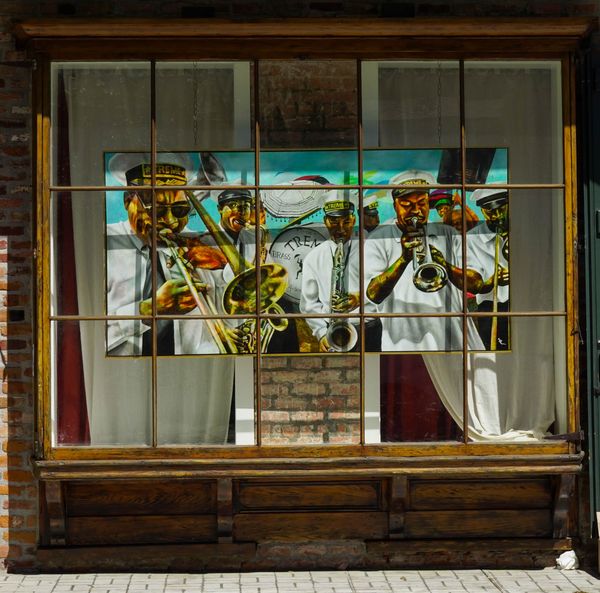
Media by workers, for workers, with Chris Garlock and Harold Phillips
The Union Bug: Ep. 1

Welcome to the premiere of my new podcast, The Union Bug! On today's inaugural episode, I've asked Chris Garlock and Harold Phillips of The Labor Radio Podcast network to come on the show and talk about what it means to create worker-focused media at a time when labor columns and reporting is at its lowest.
The Labor Radio Podcast Network is a collaborative working group of hundreds of labor-focused podcasts and radio shows. According to the LRPN website, the network exists as a way to gather together resources for listeners who may be on the hunt for better worker-focused media, saying in part,
“While labor columnists at daily newspapers have become a dying breed and union news has largely been sidelined within traditional print and televisual media, affordable and easy-to-use recording and editing technologies now allow workers, union members, leaders and activists to create their own alternative means of communication. These days, that often takes the form of either podcasts or radio shows (which often are also available via podcast).”
 PodBean Development
To check out the network and see the full slate of shows here.


Subscribe to The Union Bug here, or wherever you get your podcasts.
 Mel Buer
Episode Transcript
Below is a transcript of this episode. Please note that this is a rush transcript, and may contain errors.
MEL BUER: [00:00:00] Welcome everyone to the Premier of the Union Bug, a podcast by Workers for Workers. My name is Mel Buer, and I am your host. As you may have guessed, I am extremely excited to get back behind the mic and share some more incredible worker and labor focused discussions with listeners like you. podcast will explore what it means to work for a living in the United States and beyond, and what it means to organize for better working conditions at the shop floor and industry-wide. will include conversations with labor leaders, rank and file workers, union organizers, authors, scholars, journalists, and anyone else wanting to come on the pod and talk about the work that they do in whatever form they do. are many good podcasts on labor working and organizing in the United [00:01:00] States, and I hope to join the ranks of these stellar folks and add a bit more to the discussion Every month.
We'll include at least one episode discussing American labor history. This is because nearly every week there is an anniversary to commemorate, a victory to remember, a tragedy, to mourn and memorialize this current moment. Knowing where we come from and how we can build upon that legacy of movement history is of paramount importance. I look forward to sharing those stories with you and the stories of workers all over this country doing extremely good, important work. To kick off this inaugural season of the podcast, I thought it would be a great time to sit down with two hardworking folks in the labor movement who have built an incredible network of podcasters and audio journalists across the US and beyond. Labor Radio Podcast Network is a collaborative working group of dozens of labor focused podcasts and radio shows, and according to their website, this network exists as a way to gather together resources for listeners who may be on the hunt for better worker focus media saying in part [00:02:00] quote. While labor columnists at daily newspapers have become a dying breed, and union news has largely been sidelined within traditional print and televisual media, affordable and easy to use, recording and editing technologies now allow workers, union members, leaders, and activists to create their own alternative means of communication. These days. That often takes the form of either podcasts or radio shows, which often are available via podcast. With me today to discuss the network, which the Union Bug hasn't accepted a gracious invitation to, and talk about the importance of creating space for Worker Focus Media are Chris Garlock and Harold Phillips. Welcome to the show. Friends. It's a pleasure to have you on.
CHRIS GARLOCK: Oh, Mel, it's such a pleasure to be on and, and such an honor for us to be your, your inaugural guest. What a treat.
HAROLD PHILLIPS: Yeah, exactly. We are really glad to have the union bug as a part of the network, Mel, and we're glad to hear you behind the mic.
MEL BUER: Thanks. It's really nice to be back behind the mic. I'm very excited to see [00:03:00] where this show, uh, goes in the coming months and hopefully years. Um, to start things off, uh, Harold, do you just kind of wanna introduce yourself? We'll start with you. What union are you affiliated with? What kind of work do you do?
HAROLD PHILLIPS: Uh, yeah. Uh, so I'm Harold Phillips. Uh, I'm actually an actor. I'm a member of both SAG AFTRA and Actors Equity. And like many actors, I have to have another job to pay the. Ills, a lot of us end up waiting tables or temping. I somehow ended up being a freelance IT consultant that's led to me doing a lot of the communications work for a lot of central labor councils in Western Washington state and along the way. I started talking to one of those labor councils about starting a podcast because it seemed like that was a way I could utilize my skills to help out the labor movement. And that put me [00:04:00] in touch with this guy who lived in the other Washington, who had this thing he was doing called the Labor Radio Network.
And that's how Chris and I kind of started working together and kicked this whole thing off.
MEL BUER: Nice. Chris, what about you?
CHRIS GARLOCK: Harold is so confused about which is the actual Washington, but I'm in Washington, DC just inside. The beltway. I worked with, uh, labor councils for a long time doing communications. Same as with Harold. You know, one of the things I discovered was that, uh, I started out doing radio, actually did a radio show up in Rochester, New York, and then, uh, was working with WPFW down here in Washington, DC and then, uh.
Discovered this whole podcast, wild Wooly World of Podcasts. And uh, so we've been doing podcasts, I think I'm doing three different podcasts now, and it's just a [00:05:00] wonderful world. You know, like radio podcasts are really intimate. They're both easy to do and a lot of. Work. Uh, but they're, they're really, I would argue where the grassroots of the American labor movement, uh, are these days.
And so I just started realizing, uh, about six years ago that there were other people out there, uh, across the country that were doing work like this and just started connecting with them and called it. It's the Labor Radio Podcast Network, and it, it's really just a bunch of people, uh, like you, like me, that are, that are working in this field and can help each other out.
So that's us.
MEL BUER: So you just got this, started putting this together in what, 2019 then?
CHRIS GARLOCK: Uh, you know, I, something like that. Harold, help me out. We, I, we should probably write this down. We should know this. It's, it's been a while.
HAROLD PHILLIPS: Yeah, no, we, we really do need to start writing the book. [00:06:00] Chris, you really started things off with a. Conference call
CHRIS GARLOCK: I did.
HAROLD PHILLIPS: and other Labor Radio hosts,
CHRIS GARLOCK: Yep. Yep.
HAROLD PHILLIPS: when we started
CHRIS GARLOCK: Yeah, you're right, you're right. It, it, it was going back there, uh, for a while. Yeah. And it did. It was a conference call, actually. And it, it's so fun because we do these weekly, we've been doing these weekly meetings now for a number of years, and we do them on Zoom, and it's really nice to be able to, to see other folks, but also it's really built.
Uh, this comradery. In fact, it's funny, I met Harold, uh, last year for the first time when we were, uh, working at the, at Labor Notes Conference. Uh, you know, doing,
HAROLD PHILLIPS: seen each other in the flesh.
CHRIS GARLOCK: but we'd known each other for a couple of years, you know, on Zoom calls and so forth. So it's, it's a great way to just sort of build, build a movement.
MEL BUER: Yeah.
HAROLD PHILLIPS: so Chris was hosting these conference calls with other labor radio show producers, and then the pandemic hit. Right.
CHRIS GARLOCK: Mm-hmm. Mm-hmm.
HAROLD PHILLIPS: about [00:07:00] the same time I was looking at ways to start a podcast here in Western Washington. I got connected up to Chris. He invited me on one of these calls, and then we got to talking about how we could actually take. His idea of a network of producers that could help each other out into a more public facing arena. And that's when we launched the website, labor radio network.org. That's when we launched all our social media channels where we put out links to the latest episodes of new podcasts, new radio shows, that sort of thing. And we've been cooking on that. for about five years now.
MEL BUER: Yeah, well, you know, there are dozens of podcasts that are on the network. Some of them are. By and for specific unions. Some of them are by journalists, some of them are by scholars. You know, um, there's a [00:08:00] wide range of programming that you've kind of gathered together in this sort of collaborative network.
And I think maybe a good place to kind of move forward as to sort of talk about. Movement media, if you wanna call it that, worker focused media. You know, why is it important in this day and age to have some sort of iteration of a labor press?
HAROLD PHILLIPS: Well, before I kick this off, I do wanna make a couple amendments to what you just mentioned. Because the Labor Radio Podcast Network actually has over 250 radio shows and podcasts. And while some of them are by journalists, some of them are by established unions, lot of them are actually by rank and file union members, or just people who are interested in workers' rights and the growth of the labor movement. One of, uh, Chris and Mys favorite example is a UPS driver. Who did his podcast [00:09:00] on his phone, in his truck, on his lunch hour.
CHRIS GARLOCK: In his cab, in the cab of his truck.
HAROLD PHILLIPS: He's amazing. this is the thing about the electronic that we're living in right now, and it's especially pertinent given the whole Paramount buying Warner Brothers thing that's sort of looming. Corporate controlled media isn't there to talk to working people. Corporate controlled media is there to make money for corporations, but we have a real democratizing medium here that working people can take advantage of Where a. Anybody in any line of work can record a podcast, upload it, and have it listened to by people around the world. I think that's really one of the wonderful things that we have in this day and age. And in getting to the importance of a labor press. People have to have a [00:10:00] medium to tell their stories.
Like I said before, corporate controlled medium, it's not really interested in people telling stories. It's interested in making money for the corporations. Having forum where working people can talk to each other and talk to an audience is really crucial if they're going to be able to understand circumstances that they're living in right now.
MEL BUER: further thoughts Chris?
CHRIS GARLOCK: Yeah. Just a, a quick thing I was thinking, you know, at, at one point in my career, I, I was a producer for, for, uh, Jim Hightower, a well-known populace out of Texas. And I spent a couple of years doing that. And so, you know, he was doing a radio show, a nationally syndicated radio show. So I had to listen to, at the time it was like Rush Limbaugh and Gordon Liddy, all these folks who were in the sort of the, the talk show space, uh, at the time.
And it was a real sort of crash course for me, uh, in doing [00:11:00] audio, you know. Um, but what I saw was that the right wing was really good. At sort of stoking, it's a world that we're living in to this day, you know, different media now. I mean, talk radio obviously still there, but I think, you know, podcasts, uh, have really become a big, big part of that.
I mean, everybody's got a podcast. And what I, I think this was part of my idea with the network, was that, you know, there's folks, you know, working people who are out there and. Capitalism for all. Its many, many faults, you know, has put the means of production in our hands so that, you know, I, I suspect that I have two cats.
I'm pretty sure they both have podcasts. I mean, it's, it's, it's, it's shockingly easy to create a podcast. One of the things that we have learned, both as podcast producers and also in, in, in doing the network is that it is really hard to keep it going. [00:12:00] Especially if you're doing, you know, trying to do it on any kind of regular basis, uh, to do a quality podcast on the regular is really, really tough.
And that's one of the reasons that we wanted to create the network, is to be there as a resource. I remember one of the first things I talked about with Harold. Because he's an actor, he knows a lot about microphones and about sound and how to make you sound good. Even if you're just working out of a home studio and in a closet or a bedroom or whatever.
I mean, a lot of podcasts that have started, you know, since the network was around, we've been able to help. People here are some good microphones. You know, get a baffle, get some other basic equipment, like a boom, for example. Here are the different options in terms of syndicating your content. Things that we had to learn on the fly, uh, with very little support.
Um, so that I, again, that's sort of the basic idea of how, how, and, and I think. You know, we're nowhere near countering the right [00:13:00] wing media monolith. Let's be, you know, honest about that. But you know, it took them a long time to get there. We've got time.
MEL BUER: Yeah, well certainly the thing that attracted me to podcasting was this sort of low barrier to
CHRIS GARLOCK: Mm-hmm.
MEL BUER: You know, I started podcasting just by being a guest. On a political podcast that a friend of mine had put together in, in Nebraska, you can probably hear my cat. Speaking of she's on her podcast too. Um, you know, and, and then I got into, and I started studying, you know, my chosen. Sort of field before I got into journalism in, in grad school and, and podcasting was a way for me to express political and pH philosophical things that I was learning and, and kind of turning around in my brain and, and also to really kind of have an outlet for, um, a lot of the frustrations of becoming. A contingent academic, you know, and what that meant. And you know, and it certainly got me through a wide portion of 2020, um, in being able to kind of meet and, and speak to people. [00:14:00] That's how I met Max Alvarez for example. Um, you
HAROLD PHILLIPS: I love Max. Yeah.
MEL BUER: And, and so I think there is something really wonderful about engaging with media that has such, you know, you're not climbing over. 50 foot fences in order to begin to create something or add something to an ongoing conversation. On the flip side, what that looks like is an avalanche of content, right? Um, and so much of it, especially these days, is straight slop. You know, um, and we're not just talking about the sort of right wing manosphere type discursive silos, but also things that are, um, specifically branded content or news that isn't necessarily grounded in fact, for example, propaganda, things of that nature. And so I guess my question for you, Chris, is how can we kind of cut through that? Avalanche of slop and, and, and how can we continue to sort of [00:15:00] create conversation that adds to the discourse productively and in a good way, I suppose positively.
CHRIS GARLOCK: Excellent. I mean, you're, you're really cutting right to it and, and, and you basically, I think in, in telling your story, Mel, I think that that is the answer. Um, I, one of my podcasts is called Labor History Today, and I started it right at the beginning of the first, um, the first Trump administration. And the reason I started that very similar to how you found your way to it was it was a way for me to deal with what I saw as this sort of a historical, uh, view, right?
Uh, that, that there is this amazing history in this country. Uh, and you mentioned this at the outset, right? I mean, it's, it's actually every single day. In fact, we have a database that we've built of all the labor history just to keep track of it every single day. There is not only, you know. One thing, but usually many, many things that have happened just just in this country, in labor [00:16:00] history, examples of working people standing up and fighting back small ways, medium sized, big ways, right?
And so if you have something to say, you don't, this is not, it used to all be about mass media, right? That you had to have mass platforms. This is no longer that world, right? This is, this is, I think, a thousand flowers bloom. If you have something to say and can develop, you know, a unique, original voice, you're going to find an audience.
It may not be a large audience. If you're getting into it for the money, then you know you're, you know, unless your name is Joe Rogan. But I haven't made a penny off of labor history today. I, I, I have no interest in doing it. I do it because, you know, I need to do it. And it's interesting. When I started there was basically, I think one other labor history podcast, and now are a number of labor of their labor history podcasts.
We're all, you know, there's one up in British Columbia doing a f. [00:17:00] Fabulous, fabulous job of mining the labor history in that community. The Ruther Library has a podcast that is really digging into Detroit, uh, history and we, we share, I, I pull from their episodes from. BC there's plenty of this to go around and we can, we can all be generous.
We're not trafficking and, and fear and hate and, and riling people up. We're, we're about finding solidarity and sharing and building a better future.
HAROLD PHILLIPS: Well, I don't know that I'd say we're not about riling people up. Sometimes people need to get riled up. I mean, don't drink Starbucks folks unless the. This actually airs after the strike is resolved. In which case, take your direction from the union. Um, you asked how we can help cut through the slop. And it's an interesting question because. My first thought because we are kind of drowning in content and [00:18:00] even that is very heartfelt. But, uh, you know, the reality is there's so many YouTube channels, so many tiktoks, so many podcasts out there. My first thought was find your networks. That's sort of the idea behind Chris and my project, the Labor Radio Podcast Network. I enjoyed listening to a couple of union podcasts and I realized that I wanted to listen to more. But when I started searching on the podcast platforms for Labor Podcast, I came up with a lot about pregnancy.
MEL BUER: Hmm. Mm-hmm.
HAROLD PHILLIPS: Um.
CHRIS GARLOCK: work. Let's be clear. That's work too.
HAROLD PHILLIPS: So no matter what your interest is, there is generally a network for that. And by network I don't necessarily mean something you tune into on a dial.
There's directories, there's uh, referrals from people on your [00:19:00] favorite social media or whatever. But then I got to thinking after all that sort of swirled around in my head, we are in danger of being in an echo chamber. We've talked about the right wing media sphere, and there's a reason why we call it a media sphere is because it's circular and they're all just sort of passing stuff around amongst themselves.
And when people get caught only in that, they can pay attention to dissenting voices. So I think it's important to find your networks, find your groups that are allied with the things that you're interested in, also find some alternatives. You know, listen to that d and d live play podcast. If you have an interest, listen to, something about being a motorcycle mechanic.
You know, just something. To sort of give yourself a palate cleanser because a diet of everything all the time on one level be [00:20:00] almost as dangerous as information overload.
MEL BUER: Right. Well, I think, you know, I, my background in academia came from university academic writing, so I taught college. Composition classes, and a lot of that also includes critical media studies. And it seems to me that in this current iteration of the sort of wide ranging media ecosystem, is up to the listener, the consumer, the reader, to be more discerning about what they seek out. That necessarily means that we have to trust that our listenership is engaging in that sort of discernment and that exploration within our. Corner of the media ecosystem with curiosity, um, and being able to kind of treat what they are getting bowled over with every day. The sort of avalanche of information with a little bit more of a sort of, um, hands-off approach in the sense that, um, an arm length approach, I should say. [00:21:00] And to be able to kind of see that the information that is coming towards them needs to be examined a little bit, uh, harder before it can be received, I guess, which is completely different from social media networks that were the norm even 10 years ago. And seeing that often our social media silos necessarily slam the doors on being able to reach out to, various points of discourse that maybe we didn't have access to before. I don't know. I think about that kind of stuff a lot. As a journalist, I wonder often whether I'm contributing important things of impact to the conversation or whether or not it's just another, I don't think it's slap, but it's certainly another link in the avalanche of links that you get on on social media.
And so, you know, I'm always curious about folks', thoughts about how we create a better media ecosystem, participate in a better media ecosystem. I don't know. Harold, do you have thoughts?
HAROLD PHILLIPS: Well, you used a word silo just a couple of [00:22:00] minutes ago, and I think that's one of the things that we're struggling through right now is that people are in silos. They have very individually oriented. of things, and they're diving into these networks, but they're not necessarily talking to each other about it.
And one of the great things about the promise of social media was that you could build communities that you could have conversations about things and. It's by conversing with other people that you really help to sort of give nuance to your own views. So I think one of the things it's incumbent upon all of us to do with our listeners is to encourage them to talk to each other, to to find each other, to have conversations that is going to help them become more discerning.
At least that's my hope.
CHRIS GARLOCK: And I would just add it, it occurs to me that, that, uh, frankly, Mel, you know, in wrestling as a network, you know, we have. Like Harold said, [00:23:00] over 250 different shows in the network. You know, we, we don't make you sign anything to be in a network. There are no dues to be in a network. What we do is we look to make sure that you are actually, you know, a labor ethic podcast or radio shows.
There are a bunch of, you know, it's actually, and I guess it's a, a sign of our success. We, we get requests to be in the network and it'll be like, well that sounds more employer side or not really labor related. But I'm not gonna tell you that every single one of those shows is, you know, topnotch. You know, you, you know, every day, every show, every week, all the time.
One of the things that we came up with, and it's been, it's been a while now, I'm gonna say probably four years, we've been doing something called the Labor Radio Podcast Weekly, and it's basically sort of a sampler. It's been coming out every week. Um, we'll take, you know, anywhere from four to six minutes of maybe [00:24:00] four to six shows and just let you take a listen and try 'em out.
And, and if you like it, then go ahead and check it out and subscribe. And if it's not your cup of tea, then, then, you know, we'll have, you know. You, you can listen to it for four minutes and we'll have another thing for you to listen to. And if you didn't like any of those, um, then we'll have another one next week with, you know, four to six different shows.
And so we're, we're, I think, trying to help people, Mel, in, in trying to, you know, at least you. Get exposed to a bunch of different, uh, shows that are out there. Uh, we're working on an app, uh, that will do the same kind of thing. It'll show you here's the shows that have been released. Um, we'll be featuring, you know, some shows, uh, they're, they're not, they're not all equal.
And interestingly, you know, shows that have lots of resources are not necessarily, you know, better than the guy in his cab, you know, I mean, it, it just depends and, and. You know, the shows that I like, the shows that Harold, like, you know, Patrick Dixon, who [00:25:00] also is, is part of the core team. We all have different takes and different favorite shows and even favorite shows within those.
Were actually in our annual best of. So we've been looking at a lot of, you know, what are the best shows of the years from each of them, and that's an interesting process. So it's, uh. You know, I think we have a fairly low level of slop, which I guess must be the word of the year. I've been hearing it a lot lately.
HAROLD PHILLIPS: is actually,
MEL BUER: It is. Yeah,
HAROLD PHILLIPS: yeah, Miriam Webster just declared
CHRIS GARLOCK: Oh really? Oh, I didn't, I did not know that. Oh, that is, that is funny. Cool. Well, we don't have much of it.
HAROLD PHILLIPS: you know,
CHRIS GARLOCK: Yes,
HAROLD PHILLIPS: that you bring up the weekly be. Um, the weekly started off with just the clips, and it's
CHRIS GARLOCK: yes.
HAROLD PHILLIPS: I don't know, maybe two, three months now. We've shifted the format just slightly so that you, me, and Patrick actually get on the mic and we talk about the shows and we talk to each other.
And I think it kinda gets to what I was talking about earlier [00:26:00] about how we need to encourage people to talk to each other. To listen to each other, you know, to to help each other find some context in the world that we're in. of the things I love about podcasts with multiple people is that you kind of feel like you're listening in on a conversation between folks.
They're not necessarily talking at you the audience. They're talking to each other, and you're listening in and you kind of feel like you're one of the gang. The more we can do to inspire that. I think the better. And now one of my dogs is starting his podcast, so I tell you, everybody's got one.
MEL BUER: You know, this is probably a good segue for, uh, sort of another dimension to this conversation. Correct me if I'm wrong, but there are some podcasts in the network that are not North American. They're global.
HAROLD PHILLIPS: Mm-hmm.
MEL BUER: this network is, you know, a global network of, of like-minded individuals in the sort of international labor movement, which is a huge part of the conversation that I have with a [00:27:00] lot of individuals.
In the course of the conversations I have in labor reporting, some of the unions that I've interviewed over the last. The in independent unions that I've interviewed over the last six months have really reached out to unions internationally that sort of exist farther down the supply chain.
For example, um, blue Bottle coffee workers are talking to workers in Columbia who are on the other side of the supply chain of the coffee supply chain. Right. Um, and these conversations exist because the organizing is either against the same company or, you know, there is this need for this international sort of collaboration in solidarity. Um, how do you think the podcast network sort of fits into that, um, imperative, Chris?
CHRIS GARLOCK: Uh, just a couple quick things. We, we wrestled with this actually because we started, you know, uh, getting people from other. Trees, um, off the top of my head. Australia, uk, South Africa, you know, asking if they could be in the network and we're like, Ooh, you know, we're, you know, we're, you know, kind of got [00:28:00] our hands full with this North American stuff.
Oh, Canada, of course. Um, which is gonna be part of the US anyway. So, sorry.
Uh,
HAROLD PHILLIPS: watch it now.
CHRIS GARLOCK: too soon. Too soon. Um. But you know, to your point, Mel, it's a global world, you know, I mean, we're not operating in isolation here. And, and so that was number one. And so our, we decide we'll just use the same criteria. You know, if they ask, we'll take a look at the show and if it's clearly, you know, labor, we, I don't think we've ever written a criteria down.
We just sort of know it when we see it. Um, I.
HAROLD PHILLIPS: like the Supreme Court's definition, you
CHRIS GARLOCK: I wasn't gonna go there because I don't even know if the Supreme Court would know it if they saw it, but that's a, that's a different, different podcast. I think we are sticking with English language just because we would have no idea of what people were saying in some other language.
So I, I am afraid we are a little English centric, just as a practical matter, but Harold.
HAROLD PHILLIPS: [00:29:00] No, I'm gonna, I'm gonna disagree with you there, Chris. We are a little English centric just because, um, most of the labor podcasts we've come across. Are done in English, but, uh, there are a couple in the network like, uh, gig Watch out of Sweden, for instance, that are in that, that's in Swedish.
CHRIS GARLOCK: Oh, I forgot. That's right. That's right. Okay. I was wrong.
HAROLD PHILLIPS: um, Solidaire from Quebec that's in French.
Um, in fact
CHRIS GARLOCK: I think is bilingual, right?
HAROLD PHILLIPS: is bilingual. Yeah, I mean. The reality is that, you know, it's, it's kind of an old thing about how most Americans don't have a passport. Americans don't think beyond their borders. Heck, a lot of 'em don't even think about beyond the borders of whatever town they live in.
MEL BUER: Right.
HAROLD PHILLIPS: we have this amazing opportunity in the 21st century to actually hear the voices of people from all around the world.
And you don't have [00:30:00] SA have to have satellite tv, you don't have to pay millions of dollars for long distance phone calls. can just pull that stuff up on the internet. So having the opportunity to share those voices from different countries introduce people to the concept that all workers are actually fighting the same fight, no matter what language they speak or where they're at, is really important. As most of us know, one of the things the bosses love to do is find ways to divide working people. The more we can talk to each other and tell our stories, the harder it is to try and divide us.
CHRIS GARLOCK: Well.
HAROLD PHILLIPS: more profound there, but that didn't
CHRIS GARLOCK: Well, no, I just wanted to, to tag onto what Mel, you're talking about as a journalist interviewing folks. Right. And I gotta tell you, you know, because we regularly hear from, uh, this Australian show and, and, and, uh, this South, south African show, um, and, and, and these [00:31:00] Canadian shows. And, and to Harold's point to hear people talking about.
You know, what are local struggles? But you're like, well wait a minute. That's a public sector thing. That sounds an awful lot like this thing we just heard about in Iowa. You know, and, and you do realize, and I hopefully what we're hoping is that people maybe start getting inspired by this kind of cross-fertilization.
We, we don't know what happens when people listen to these different things, but you know, it's gotta be good. Right?
MEL BUER: Right. and you know, it's been very instructive to speak to some of these unions who are reaching cross border to have these sort of conversations in solidarity with unions, uh, in, within their industry, but farther down the supply chain. It is certainly a, a good reminder that. As Harold and Chris, you have both mentioned, we live in a global economy now. It is not sort of siloed off, it's a global capitalist con economy where items that are created in, you know, [00:32:00] Southeast Asia, end up in stores in America. Those workers have a vested interest in their working conditions just as we do. I think a lot about the REI unionization effort and um, something that they tried to do earlier this year, uh, which was to address issues in re i's own supply chain labor rights.
Uh, and human rights violations that were happening in RE i's own supply chain by, uh, engaging in organizing that trying to upend the makeup of the board here in the United States. That would help kind of. Mm-hmm. Push the decision making back towards a more equitable direction. Right? And that was spearheaded by union workers who are, you know, struggling to get contracts in their own bargaining. you, you know, the, the sort of information that is coming across this border is often mediated by our mainstream. Legacy media. Um, oftentimes we just don't hear about [00:33:00] these labor struggles that happen globally. Um, and being able to kind of pinpoint those moments where that international solidarity happens is really.
Wonderful. You know, I, I think a lot about a lot of the reporting that Feliz Leone does at Labor Notes is to sort of bring that conversation from Mexico and Mexican workers movements to the United States as well. So being able to have that space to be able to create more chances for international solidarity building within media, I think is extremely important.
And it's cool that the network does its part in that I think.
HAROLD PHILLIPS: Yeah, and I think, Mel, you brought up something about Blue Bottle Coffee and the way that they've been working with unions in Columbia. You know, blue Bottle Coffee is owned by Nestle, which is a multinational corporation. And the more you start to point out that multinational corporations are doing things [00:34:00] in other countries. The more people in the United States can look at what those multinational corporations are doing here how they could very easily start to roll that out here as well. So again, bringing that up to people in the United States, we hope is going to open their eyes and make them think about this stuff.
MEL BUER: think particularly with the Blue Bottle workers, it's really cool the conversations that they were able to have with the, the union there, Sintra the, the, the union's name. At one point they sent a couple representatives of the Blue Bottle Union to South America to speak to and, and commune with and talked to an organize with those workers farther down the supply chain, which I think is an absolutely wonderful important piece of. Building in a, a strong international labor movement. And I don't know, I'm, it, it excites me to see that kind of work and it excites me to also kind of [00:35:00] be part of a network like this that also tries to open up those opportunities for that conversation and discourse amongst workers from all sorts of countries. One final question before I let you go for the day. is one thing that has really kind of surprised you over the last six years as you've kind of built this network out? Harold?
HAROLD PHILLIPS: Boy, there have been so many surprises,
CHRIS GARLOCK: So many surprises.
HAROLD PHILLIPS: Um, for something that seemed like it was gonna be kind of easy over the past five years, I mean, we've, we've definitely. our hurdles and our milestones. the thing that's really surprised me the most though is just. The resilience of people who decide they want to do this, decide they want to get onto a microphone and share their story with the world, or have interviews with people that they don't think other people might have heard about. You know, one of the [00:36:00] things that we've seen over the years is that, like Chris said earlier, one of the hardest things about doing a podcast isn't getting the microphone or the equipment, it's. Being consistent, doing it week after week or month after month, whatever schedule you're trying to do. And sometimes shows will go dark and we'll be like, oh, well that was a great show, but you know, I mean life happens, I guess, you know, that, that, that ended up, uh, not being a part of where they wanted to go and then. Six months, a year, two years, sometime they're back. They feel the need to keep spreading the word about what they're talking about or keep talking to the people they're talking to. It takes a special something. To wanna be able to work in this medium. And like Chris says, nobody's doing it for the money, but, uh, they, they'll be back. they may have gone away for a while, but they'll be back in some form or another.
MEL BUER: Right. [00:37:00] What about you, Chris? Anything that's surprised you over the last six years?
CHRIS GARLOCK: I, I wouldn't say it's so much as a surprise, but you know, like you, I come outta journalism and, and I still, you know, I, I, I, I'm the executive director of the Labor Heritage Foundation. We have a weekly newsletter that's really popular. People love it. I love doing it. So I, I still love journalism. Um. But you know, journalism at is base is stories, right?
And so doing radio and podcasts always was natural to me and, and so I really see these things as being. They go together incredibly well. If I'm, if I'm interviewing somebody, it's, you know, I can interview them with my tape recorder that can turn into an article. I take pictures. But then to have their voice and to be able to cut that in with some music, and then another interview and a little audio, and it just, it is such, um, an [00:38:00] incredibly personal medium.
And, and when I, you know, when a piece really comes together, it could just be an interview, a straight up interview. It could be something that's on the street. It's really kind of magical and, and it, you know, I've been doing journalism, you know, since I was 16 years old. And, and, and I, I feel the same excitement and thrill at, I've got a story to tell.
This person has a story to tell and we can bring that story. These are stories of struggle, labor history, you know, things that, that right into your, into your head, right? That, that, that, that is a journalist dream to literally get inside. Your head and to be able to bring those voices or those sounds, uh, is, is, you know, and I'm, I'm a huge podcast listener.
I have lots of favorite podcasts and we listen to, you know, podcasts throughout the network. And so, so again, I don't think it's surprising at how [00:39:00] powerful, but I will say that, you know, it's at least a couple times a week when working on the weekly and I'm, you know, cutting an interview, I'm like. Oh my God, this is so, so good.
There are just people out there throughout the network that are doing phenomenal, phenomenal work, and it's not a surprise to me, but it is, is something for which I am, I am grateful and really happy to be able to bring to a, a wider audience.
HAROLD PHILLIPS: I'll tell you something else, Mel, that wasn't a surprise It was me. a lot of people who aren't in unions to labor radio shows and podcasts and, and I started listening to the very first one was a show out of Pittsburgh called, um. The Union Edge way,
CHRIS GARLOCK: yeah. Oh, I remember that. Yeah,
yeah. Yeah.
Yeah.
HAROLD PHILLIPS: Um, and I was just interested in the stories like Chris is saying, you know, and I'm interested in working people standing up for things. And [00:40:00] along the way I'm finding out about these things called unions and, uh, I'm finding about about solidarity and that sort of thing. More and more as, uh, as we hear from people who have followed the network.
Um, we're finding out they may not be in unions, you know, but they absolutely support workers standing together. support workers fighting back, and they're learning a lot about organized labor just from listening to some of the shows that are on the network.
MEL BUER: Yeah. Well hopefully it inspires people that organize a union in your own workplace.
HAROLD PHILLIPS: Which is always a good idea.
MEL BUER: Mm-hmm.
CHRIS GARLOCK: here.
MEL BUER: Well, hey, thanks again for coming on the show. It was an absolutely wonderful conversation and I really look forward to working with you and working with the network in the coming months, weeks, months, years.
Where can folks find your work? Or if they wanna get involved with the network, how can they reach out to you?
CHRIS GARLOCK: So first of all, Mel, again, it's so wonderful to have your voice back [00:41:00] and we're looking forward to we're, we're gonna book you for decades, not just months or years, we
MEL BUER: I'm excited.
CHRIS GARLOCK: we're looking long term, but uh, labor Radio network.org is where to find us. We're on. All the socials and just, uh, check it out and, and listen and, uh, and, and that the weekly, the weekly I think is a great sort of, you know, try before you buy kind of a way to get in there.
HAROLD PHILLIPS: And if you're interested in starting your own pod. That talks about workers' issues or labor issues and you wanna reach out to, you know, maybe have an idea, maybe you wanna bounce something off the network members. Send us an email info@laborradionetwork.org or of course find us on those socials and DM us and you know, slide in all that stuff.
CHRIS GARLOCK: We should mention Mel, I know we're just on audio now, but uh, uh, Harold and I are both wearing our Labor Radio podcast, uh, network t-shirts, which are in two colors, all sizes. And so even if you're not starting a [00:42:00] podcast, but just, uh, wanna wear, wear the network t-shirt, uh, I think we have hats too, don't we?
HAROLD PHILLIPS: Uh, hats are on the list of things to develop. Right now it's just the shirts,
MEL BUER: Oh,
HAROLD PHILLIPS: though. One of the things about the shirt, uh, you can't see this obviously because this is audio. It's a fist holding a microphone, but there's a QR code inside the mic ball, and if you go there, you'll find links to all kinds of Labor Radio network stuff.
So. Buy the T-shirt, find out where the QR code goes. Nothing bad could happen to just shooting a random QR code, right?
MEL BUER: Love it.
HAROLD PHILLIPS: I.
MEL BUER: Love it. Well, thanks so much guys. And that's it for us here at the Union Bug this week. Thanks again for your continued support and solidarity as I've gotten this podcast project off the ground. so grateful for your listenership and if you're interested in supporting the podcast, you can head on over to Words About Work News and subscribe to the newsletter. And if you'd like to [00:43:00] support this project financially, you can do so via the About tab on the website. Otherwise, you will find new episodes of the Union Bug wherever you get your podcasts dropping every Friday. Thanks again for listening, and I do hope you'll stick around. Until next time.
![VIDEO: State Terror, Vol. [XX]](https://storage.ghost.io/c/e8/83/e8831be3-eb74-4bc5-ac56-b81878242c14/content/images/size/w600/2026/03/CEC623D9-9A92-4CDA-9385-698C8A35BDA6.png)