The Union Bug: Ep. 003
In conversation with Daniel Gross about his forthcoming book, "Unions of Our Own: 8 Building Blocks to Change Work...and the World"
[For those viewing this post via email, listen to this episode here.]
As you may have noticed, it’s been awhile since my last episode, and I am very stoked to be back behind the mic bringing you more conversations from the labor movement and beyond.
On the show this week is Daniel Gross to talk about his forthcoming book, Unions of Our Own: 8 Building Blocks to Change Work and the World. The book provides a “radical, step-by-step framework for workers who want to fight for the better workplaces they’ve always envisioned—and dream of bigger changes too."
Mark Bray, author of Antifa: The Anti-Fascist Handbook, said in his praise of the book,
“Finally, Daniel has brought us Unions of Our Own, an immensely practical and accessible guide for building workers’ power. Daniel’s vast experience organizing with workers comes through in every page of a book that is sure to become an instant classic in an era of increasingly chaotic politics and economics. If your workplace lacks a union, this is the book to read with your fellow workers. If you are already a union member: read this book to expand your ranks and build more power from the bottom up."
Daniel is a veteran labor organizer and cofounder of the IWW Starbucks Workers Union, former labor lawyer and co-author of the classic Labor Law for the Rank and Filer: Building Solidarity While Staying Clear of the Law.
Pre-order Daniel's Book here.
 Daniel Gross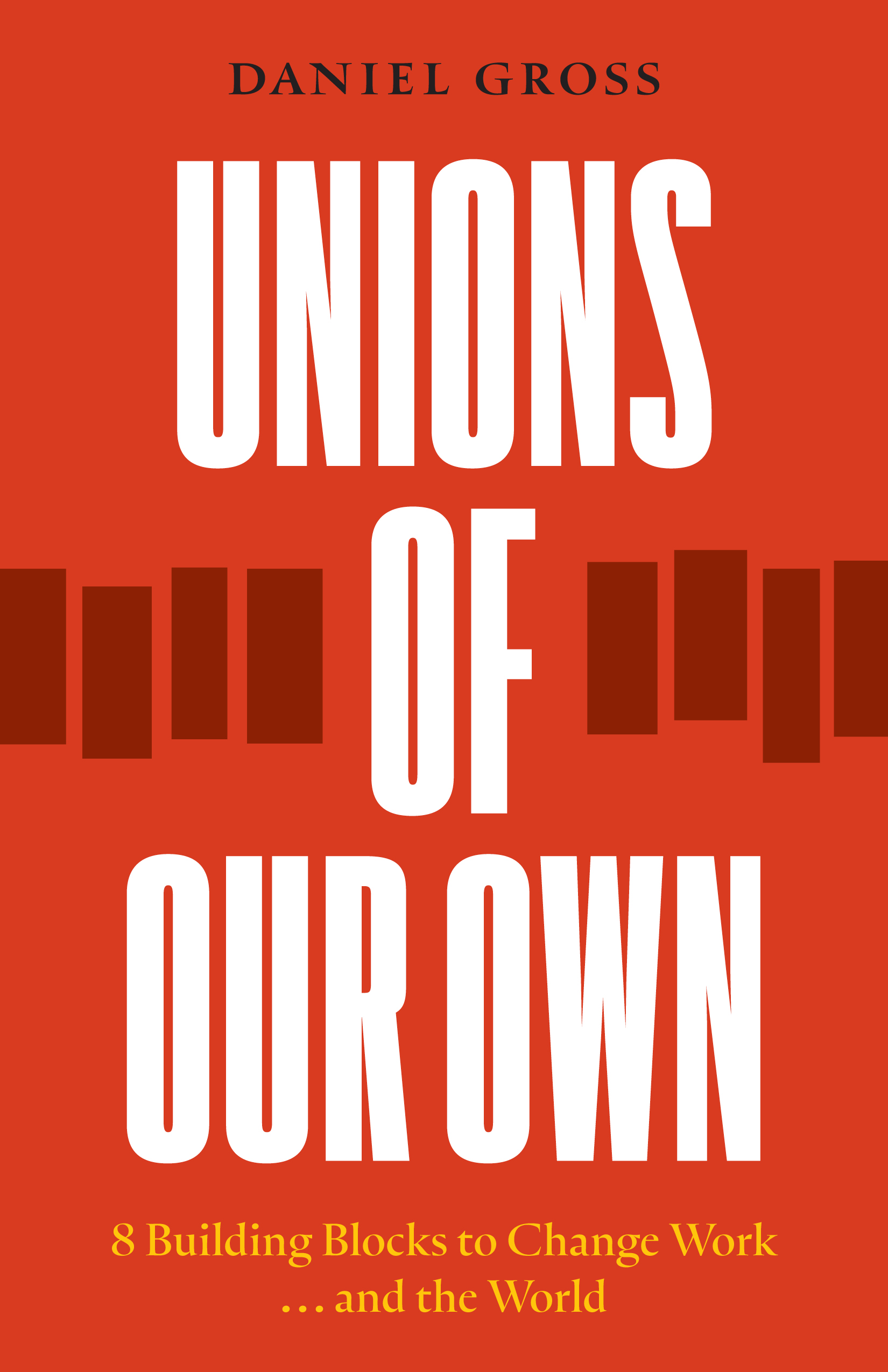
Host: Mel Buer
Production and Editing: Mel Buer
Episode Transcript
Below is a transcript of this episode. Please note that this is a rush transcript, and may contain errors and misattributed speakers.
00;00;11;28 - 00;00;33;07
Unknown
Welcome everyone to another episode of The Union Bug, a podcast by workers for workers. My name is Mel Buer and I'm your host. The Union Bug is a proud member of the Labor Radio Podcast Network, and explores what it means to work for a living in the United States and beyond, and what it means to organize for better working conditions at the shop floor and industry wide.
00;00;33;09 - 00;00;52;12
Unknown
As you may have noticed, it's been a while since my last episode and I am very stoked to be back behind the mic, bringing you more conversations from the labor movement and beyond. On the show this week is Daniel Gross to talk about his forthcoming book, Unions of Our Own Eight Building Blocks to Change Work and the world.
00;00;52;14 - 00;01;16;09
Unknown
The book provides a, quote, radical, step by step framework for workers who want to fight for the better workplaces they've always envisioned and dream of bigger changes. To Mark Bray, author of Antifa The Anti-Fascist Handbook, said in his praise of the book, quote. Finally, Daniel has brought us unions of our own, an immensely practical and accessible guide for building workers power.
00;01;16;15 - 00;01;39;00
Unknown
Daniel's vast experience organizing with workers comes through in every page of a book that is sure to become an instant classic in an era of increasingly chaotic politics and economics. If your workplace lacks a union, this is the book to read with your fellow workers. If you are already a union member. Read this book to expand your ranks and build more power from the bottom up.
00;01;39;02 - 00;02;04;28
Unknown
Daniel is a veteran labor organizer and co-founder of the IWW Starbucks Workers Union, former labor lawyer and coauthor of the classic labor law for the Rank and File for building solidarity while staying clear of the law. Welcome to the show, Daniel. Thank you. It's good to be here. So to kind of kick things off, I think a really good way for us to start is just to really get a chance to know you.
00;02;04;29 - 00;02;27;07
Unknown
So if you could just tell the listeners a little bit about yourself, maybe your background in organizing. You touch on it a little bit in the introduction to your book, and you talk about the various sort of travels that you've had throughout the book as well. So, yeah, just give folks a sense of who you are and the kind of work you've been doing for the last couple of decades at this point.
00;02;27;10 - 00;02;54;19
Unknown
Yeah, yeah, it's been a minute. I could probably date myself pretty well by by sharing that my my entry into the labor movement was working at Borders Books and Music, which gets blank stares depending on, you know, the general generational makeup of of the audience. So yeah, I've been I've been in it for for a minute now.
00;02;54;21 - 00;03;31;00
Unknown
Started around 2000. Kind of had sort of, you know, short term bad jobs at small businesses before then, kind of had some type of general dread about the world and capitalism, but wasn't an activist or anything like that. So borders definitely changed that. It was the dominant kind of multinational bookstore giant. It's kind of the Walmart of books at the time with anchor strip malls and whatnot.
00;03;31;03 - 00;04;06;05
Unknown
And, you know, it was just something about being paid that same poverty wage, the same bullshit hours, disrespectful management, but having like, this sprawling conglomerate over my head with no contact with us except to control us. Something like snapped or clicked in that environment. So yeah, I started, you know, kind of figure out what does what does one do in these situations?
00;04;06;06 - 00;04;37;12
Unknown
You know, I had grown up like peak neoliberalism. I didn't even really acknowledge or understand the importance of, like, my family's own labor history. Like my grandfather, teamster in the Bronx, also in the plumbers union at different time in his life. But just like, you know, unions were just so, so down on their back. I had to kind of, like, figure it out.
00;04;37;15 - 00;05;01;00
Unknown
But yeah. This was like, early World Wide Web days. This was Yellow Pages. Still a thing, you know? So it was like yellow pages, world wide Web. Like, you know, what do you do? Like, who do you who you reach out to. Started kind of chit chatting with coworkers like, you know, shocker. At the time I didn't get this.
00;05;01;00 - 00;05;20;18
Unknown
But like, you know, unions were not getting back to me. I'm like, what is this like? It's just a thing. Like you called the union, and the union called you back because they're happy and we do the thing together. So it was just one union. The way it worked out, that was the Industrial Workers of the world, the IWW.
00;05;20;20 - 00;05;43;27
Unknown
And so, yeah, my entrance into the labor movement was really through that, some of the kind of old heads there in that community sort of set me on a little path, starting meeting with coworkers. You know, we would just basically get together, folks house. A lot of us were already friends, kind of expanded out from the friend network.
00;05;43;29 - 00;06;14;16
Unknown
So the significance of that experience is that it got me into labor movement. It got me ultimately into global justice stuff and all the, you know, WTO stuff that was happening at the time. But the campaign itself, I kind of pulled like a normal ray, like I did not get on a table, literally, but I might as well have like every store meeting, I was challenging the general manager, every little cautionary conversation I fight with them and stuff.
00;06;14;18 - 00;06;50;15
Unknown
Just I had that, you know, justice yesterday, you know, righteous thing. Of course, I got fired pretty quickly. And, you know, so I took a swing, I missed the Amazon ended up you know, we're talking before we started recording. My Amazon ended up taking out borders. Yeah, not the IWW, but, you know, it it really started me on a path that ultimately there's a little more to the story that happens after, but put me on a path where I ultimately became obsessed with, like, how do you win?
00;06;50;16 - 00;07;24;07
Unknown
Right. Like, how do you don't lose that, you know, impatience for justice, but kind of mix it with a healthy patience and just more understanding of like, what causes victory, what maximizes the probability of victory. So that was that was my way. Yeah. You know, I, I worked at Barnes and Noble in my way. Yeah. In my first master's degree when I was going to school for literature and experienced similar experiences.
00;07;24;09 - 00;07;52;23
Unknown
I mean, even in food service, when I was working for major conglomerates like Sonic Drive-In. Right. You have these sort of like petty tyrant managers who are receiving directives from on high, you know, and there's no it's just a faceless top of the pyramid. And it's really demoralizing when you find yourself in that situation going. I make 775 an hour and I have nowhere to, like, redress my grievances.
00;07;52;23 - 00;08;15;05
Unknown
Right. And, you know, I've also found myself in situations where, you know, the righteous fury gets a little too loud, a little too quickly, you know, and you find your little burgeoning union conversation suddenly become a mass firing. Right? People get start getting fired for being late once, or they get shifted to a different store or whatever it is.
00;08;15;05 - 00;08;33;05
Unknown
Right. So, you know, it's interesting to me that I think that we have a lot of young people, and that's certainly something that I hear a lot from folks when I talk to them in the course of my own travels as a labor reporter is a lot of young people really want to, like, be militant in a really exciting way.
00;08;33;09 - 00;08;55;20
Unknown
Right. And then find themselves putting the cart before the horse a little bit. And it's good to see a book like this book, which we will be talking about, unions of our own, which really lays out like a really solid strategy for not only building a collective that, you know, in the workplace on the shop floor that really can like move towards, like building community.
00;08;55;20 - 00;09;12;06
Unknown
That reduces the atomization that you talk about in the book, but also you can win your struggle and you can win your union. And I really appreciate that these steps are laid out so clearly. Right. So, you know, before we start talking about really kind of the finer points of the book, you know, where did this idea come from?
00;09;12;06 - 00;09;29;27
Unknown
You talked a little bit about wanting to strategize ways to reach victory. Right. And you have done previous work in law and that you previously coauthored a book, which I've read, which I love, which is labor law for the rank and file with Stott and Linde, which I think is kind of a Bible for a lot of people.
00;09;29;27 - 00;09;53;06
Unknown
But how did this book specifically come about? When did you start thinking about actually writing something like this? Yeah. So just to take it forward a little bit to to tea up unions of our own After Borders, I'll kind of skip but interstitial campaign in the nonprofit sector, which is kind of similar at a similar problem but when come.
00;09;53;07 - 00;10;24;00
Unknown
2003 I got to Starbucks, got employed at Starbucks, and at that point I had, you know, much more experience training, had done. The thing had, you know, sort of a lot more patience. And, you know, we did a year of organizing before we went public in 2004 with the Starbucks Workers union and that, you know, that connected. That just was a beautiful thing.
00;10;24;02 - 00;10;59;06
Unknown
You know, we're not here to get all the details of that. I mentioned some in the book, but, you know, it really was spread like wildfire. You know, it was this incredible thing where we're like, hey, you know, we can we can do the organizing ourselves, right? We can do this. We can do a different thing. 2003 like we're in Bush administration, we're in deep neoliberal still where labors really on its back, fast food considered 100% unorganized.
00;10;59;09 - 00;11;23;05
Unknown
It's completely off the map. And, you know, we showed that wasn't true for my store. We ended up spreading around New York and then kind of hopscotch it around the country. I think it was like, I think it was Chicago and then Maryland and then Minnesota and then Grand Rapids, and then it was Omaha. And, you know, off to the races.
00;11;23;05 - 00;11;50;28
Unknown
So that experience was a positive one. There's some really big victories that we achieved. We had about 15 years of power at what everyone knows is the world's largest coffee chain. Still, we weren't able to we would have liked to endure beyond them. And the model, we still weren't able to overcome. The main thing we couldn't overcome was just the chronic firing of rank and file leaders.
00;11;50;28 - 00;12;25;24
Unknown
Just epidemic, constant year after year, month after month. And we were able to surmount that for a while. But finally we couldn't. So, you know, finally I hit the ball that connected good this time. But, you know, it didn't go out of the park. So, you know, the journey kind of continues to keep figuring stuff out. But it was one of the many reasons I was so moved when the baristas of today started organizing was like, once he worn that green apron, you know, it's you have a lot of solidarity, empathy with anyone there.
00;12;25;24 - 00;12;48;07
Unknown
So it's interesting how things go. And I talked about some of their campaign and our campaign in the book, but in the mix of all this, I'm like, I gotta figure out what these briefcase guys are doing. So I'm like, I know there's Pinkerton types elsewhere in the world, you know, killing unionists. I know violence will happen again here as labor grows.
00;12;48;07 - 00;13;09;15
Unknown
But like the main thing I've seen here in the US is the briefcase, guys. Or sometimes you don't see them. Like, I want to go really deep, figure out what all that's all about. Look at the law from a rank and file perspective. So I did the law school thing, ended up meeting my great late mentor Sot and rest in power.
00;13;09;17 - 00;13;34;00
Unknown
Did labor law for the rank and file together and yeah, that that book plus the Starbucks Workers union helped me start just connecting with a lot of workers. Folks were just reaching out every industry, basically. Not every. I haven't done much in the public sector. Truth be told, outside the public sector where I've done little, almost all the industries, right, I've gone into a company, workers in struggle.
00;13;34;00 - 00;13;56;03
Unknown
So that helped kind of grow the patterns I was seeing out there, the challenges, the successes that were happening. Yeah, so I did I did the labor lawyer piece for a while as part of my work at a worker center. I did over ten years organizing food manufacturing factories with immigrant workers. So I still have that lawyer background.
00;13;56;04 - 00;14;22;25
Unknown
I'm not doing any lawyering anymore. I went all in on organizing and union building. That's just where the universe wanted me to be, and I wanted me to be as well. So that's the context that kind of brings us to getting drawn into this five year project of writing and researching and thinking about and editing, because I overrode it about 2 or 3 times, probably the size of unions of our own.
00;14;22;26 - 00;14;56;26
Unknown
Yeah. You know, the book kind of centers around these eight building blocks of Union building, and you have a number of things that can be sort of replicated by organizers, including a union model canvas, which takes these eight building blocks and puts them on a piece of paper that allows folks to begin to write down the various strengths, challenges, and the items that kind of help individuals visualize what they need to do in order to successfully organize a union.
00;14;56;26 - 00;15;38;03
Unknown
And I think this is a really great kind of piece here that makes it a lot easier for folks because I think, you know, certainly when I started organizing the concept of union organizing or organizing in general feels really nebulous to a lot of folks, certainly did to me, where, you know, that injustice is happening, you know, that you're you're being fleeced, essentially, whether it's pay, working conditions, whether it's not getting vacation, whether your coworker got their PTO canceled, whatever, the sort of grievances that, you know, you begin to see that things aren't quite right in the workplace when you go, we should do something about it.
00;15;38;04 - 00;16;15;11
Unknown
A lot of folks don't really understand what that means, right? Or they have a hard time visualizing it. I think a lot of that is the product of propaganda, and not living in a country that has higher union density, you know, and doesn't the the sort of the doors to reaching that space where you can join these organizations feel closed for a lot of folks, as you have noticed, and as we know, certainly in places and regions like the South, certainly in industries like food service, which thankfully is really starting to to kick off and has for the last, what, 5 or 10 years.
00;16;15;13 - 00;16;39;06
Unknown
But yeah, so there's this sense that like, you simply just can't visualize what it means to start organizing. Right? And I think that's a really good strength of this book, is that you have really laid this out in such a way that either new organizers or cynical organizers or folks who really just kind of need to inject some new sort of thinking into how they are trying to bring their shop floor together.
00;16;39;07 - 00;17;07;08
Unknown
They have that in this book. So I think a really good place to kind of be is to really sort of talk about these eight building blocks that you've laid out and, and why it's important to kind of have the sort of these elements to be able to kind of point to. Yeah, I appreciate that. And that's exactly why I wrote the book, speaking with workers and diverse industries, kind of you could call it a coaching role, for lack of a better term over the last years.
00;17;07;13 - 00;17;31;17
Unknown
You know, the question, it just always comes up. Particularly I have lucky based on my my past. It tends to be, you know, visionary workers that that come and find me. Right. Folks that want to really put racial and gender justice at the forefront of their work. They have a member control idea, right? They're just starting out. They're not.
00;17;31;18 - 00;17;56;02
Unknown
You know, I'm a super unionist. Some know little to nothing about unionism. Other knows others no more. But that's the universal feedback is like, this thing seems murky, you know, what's the path? How does this is this even real? Can we have like a union that we control? You know, we care a lot about our wage, our working condition.
00;17;56;02 - 00;18;18;05
Unknown
We also care about how the work is organized. We care about like autonomy. We care about if our company is partnered up with Ice, right. Things like that. It's like, okay, some people learn through one on one, some people learn through group training. Like we all learn different ways and we all learn multiple ways. And some of us like to have a book read in a group read together.
00;18;18;07 - 00;18;44;26
Unknown
I'm like, let me put this down on paper, because what I have found and asked many workers, hey, where are you looking to for guidance now? There's many good trainings out there. There's many excellent books out there. They tend what I've seen. They tend mostly to method. They tend mostly to kind of technique. And that's great. Method and technique is fantastic.
00;18;44;27 - 00;19;06;17
Unknown
But if there's one thing I've learned in my time in unionism is that it actually takes a complete union model to win, right? So organizing is the heart, you know, if anyone wants to challenge your book and say, this guy saying organizing not to think there's no organizing is the heart. And there is organizing stuff in the book.
00;19;06;17 - 00;19;31;18
Unknown
But to safeguard and to make that organizing flourish and win and be sustainable, it takes something more. I'm calling that full spectrum of unionism, union building, just to just to use a different term. And there are eight building blocks that again and again, you can see when they're working on their own and they're working together, you see a union saw.
00;19;31;20 - 00;19;53;23
Unknown
Right. And by that I mean workers meeting their needs as they define it, sustainability over time and advancing their values and vision of the world. So that's my high standard of what winning is. And then when you see those things not lined up, you're not going to see that, right? Most of the time it's just going to be a union coworkers don't care about.
00;19;53;24 - 00;20;29;01
Unknown
Right. That's the number one case. But it could also be a case where, for example, you've had maybe you've made great progress. But the structure element, right. One of the elements structure that wasn't right. And so what you made got taken away from me. Right. So this is what I think is different about the book. It's saying we need to, as rank and file, have access to the full set of decisions that we need to work through and figure out, because like you said, now there's incredible emotion in the working class.
00;20;29;01 - 00;20;55;17
Unknown
It's uneven in different parts of the world, but in many parts of the world there is motion. We've seen incredible campaigns in so many industries where we hadn't seen many, many campaigns. But, you know, you look at the reality of majority of us remain very, very screwed. You know, I think, what is it now? 94 out of 100 of us in the private sector, we're not touched by unionism in the US, globally.
00;20;55;17 - 00;21;24;04
Unknown
I think it's you know, I think one out of ten is touched by unionism around there. So, you know, we obviously need something different. And that's what the book really tries to do, is rest those decisions away from folks who are not employed on the shop floor and put it into the hands of of those who are. I mean, not only are those decisions made off the shop floor, but some of them in many cases, this is literal.
00;21;24;04 - 00;21;50;02
Unknown
This is not hyperbole. Our decisions that were made about union models in the 1930s and 1940s, they were made then and they have not been, you know, engaged again to make differently. So that's where, you know, the sort of the real will to put something out there that I thought would be different and would would be useful for workers to maximize the probability of victory.
00;21;50;03 - 00;22;14;21
Unknown
Well, I think, I think you bring up a good point. You know, I think there are there is a lot of I mean, I could pull up surveys from the last five years of workers in both the private and unorganized areas of the public sector who are wanting to join a union. Right. The the approval ratings for unions in the last just since 2020 alone have skyrocketed.
00;22;14;21 - 00;22;48;19
Unknown
Right. And a new generation of individuals, young folks, you know, I'm 33 young folks younger than me coming out of college are looking for those opportunities to be able to organize their workplace. And either the resources aren't there or the interest isn't there, or they don't know where to start. You know, there's this giant gulf between the individuals who are coming together on the shop floor in whatever workplace they're in, and feeling like they could potentially organize something, and then being able to actually find the people who can help them organize.
00;22;48;20 - 00;23;12;13
Unknown
Right. I love that this book gives you the sense, and this is something that we, as Wobblies already know, right? That when you have the ability to come together collectively and to work out a collective organization and you can figure that out amongst yourselves, you don't need to wait for permission, right? And it's cool to see that this book exists, and I'm excited for folks to read it.
00;23;12;13 - 00;23;32;10
Unknown
This episode is going to come out before it actually is published, because it comes out on the 28th. Right? And hopefully be able to see like, okay, what if we read this together and we found we start taking these steps, what happens next? You know, and like the sky's the limit at that point right? No, I'm resonating 100% with what you're saying.
00;23;32;10 - 00;23;53;19
Unknown
One of the contributions, I hope, of the book is to kind of help us work through. So, you know, so there's so many visionary, value oriented folks in the working class, right, that are, you know, the union has done this in this union. How could they be promoting AI in this? Union censored this and, you know, all these things.
00;23;53;19 - 00;24;21;07
Unknown
And it's frustrating. What the book tries to point out is what are the structural to use that kind of big term? What are the structural and material or financial realities that that push that stuff? And on on the broadest level, one of the arguments is that our union model that we choose is highly influential to the kind of vision will be able to express.
00;24;21;08 - 00;24;42;28
Unknown
Right. And that there's the back and forth relationship between our vision and their and our model, so that we should be cautious if we hey, we want this certain vision we believe in. We're socialists, we want a socialist vision, or we want a vision that's against empire. We don't want to be an empire company. Well, that's great, but we have to make sure we have a vision and accord.
00;24;42;28 - 00;25;09;18
Unknown
And so, yeah, the book is a kind of tour through these eight building blocks, not a tour just to check them out, but to set up a context where where workers can discuss, ultimately debate, you know, align and kind of take a first draft position. Hey, what what are we going to do in this lock and then ultimately figure this stuff out through struggle, through experimentation?
00;25;09;18 - 00;25;29;03
Unknown
There's a tool in the book as well about experimentation. See if what we think is going to happen is going to happen. Maybe it won't. And then we just change it, right? Basic stuff. But a lot of times in campaigns, we bang our head against the wall because we just got knocked on more doors. And, you know, all of a sudden years have gone by and we're still knocking on the door.
00;25;29;04 - 00;25;53;13
Unknown
So this has been an experimental framework. But yeah, what I've, what I found is really there's kind of two sets within the eight. Right. So there's the first four building blocks I call them and unions of our own, the foundational building blocks. Right. It starts with defining our constituency. Who is our union of by and for and then move then to what type of union are we going to build?
00;25;53;13 - 00;26;18;10
Unknown
This is definitely going to be one of the more controversial parts of the book, in that I'm saying that there's kind of the the first choice, really, in union type is between traditional unionism and solidarity unionism. Right. We're not going to have time to go into all that. There's of course, many different kinds of traditional unionism and certain kinds of solidarity unionism.
00;26;18;10 - 00;26;41;20
Unknown
But I'm saying that's the threshold in that that's going to lay out the, again, stupid word structural kind of financial vision. Reality of the union is going to start there. Then you can have class struggle union, you could have social movement union, you can have open source. There's so many unionism. Right. And you can fit those in downwards.
00;26;41;21 - 00;27;00;24
Unknown
Like if you think of it as like a decision tree, that's the right term, I should say, by the way, because those wobblies, they fill me because I'm, I'm a wobbly alumni. I should say that one of my best friends, every time I see him. Why don't you pay dues anymore? So just to make that clear, I'm a proud alumni.
00;27;00;25 - 00;27;27;15
Unknown
I've not been in the IWW as a member for a long time, but I'm just saying workers have the unique wisdom and the right to work through this question to take that away and say, this is above the pay grade. Your job is to bring your coworkers into a committee or cards, and it's it's to get in the union, not decide what kind of union is going to be.
00;27;27;19 - 00;27;54;01
Unknown
I fundamentally and against that philosophically. And I just don't think it's the way that we win. And I think there's 100 years almost now of, of, of a record that is in accord there. So then the final foundational building block, we all love this, right? Labor nerds. We love strategy. You know, you get to the bar after the picket line and someone says strategy.
00;27;54;01 - 00;28;18;04
Unknown
Everyone's eyes light up like we just love this shit. But strategy is the 800 pound gorilla in unionism. The book offers a framework. There's no cookie cutter here. There's no method. If we just follow it really well, we're going to have powerful unionism. Like, I just fundamentally think that's wrong, that there's just this already a method, and you learn it really well.
00;28;18;05 - 00;28;43;09
Unknown
It's kind of a technocratic exercise. No. So this is a framework that, that workers who know their industry, they have their humans outside of work with knowledge. Right. And then just by virtue of organic ties that already exist out there, figure out the strategy, bringing the research component as well. That's not the most innovative thing in the book.
00;28;43;11 - 00;29;09;27
Unknown
That's I think many believe we have to have the research part. And then I bring in the labor strategy, cannon saying, look, use your own thinking using a couple strategy frameworks that I offer. Do the research. But and I'm totally against the opposite of cookie cutter unionism, which is blank, blank slate, blank slate. Like, yeah, we're going to start from first principles and we're going to all the thing.
00;29;09;29 - 00;29;43;26
Unknown
I'm like, yo, our forebears, they have figured out some stuff real good. Like, this is validated stuff, right? Doesn't mean you could just take it off the shelf and use it, but you need to at least pick it up off the shelf and consider whether it inspires you. So I have a labor strategy cannon that I'll tell you if, if if you're thinking about, you know, getting into unionism at your employer and other stuff in the book doesn't resonate like this can and this is going to make you more powerful against your boss, right?
00;29;43;28 - 00;30;06;04
Unknown
I start with the foundations. I'm like, Mel, you know what? If you don't have the foundation, you don't have to really worry about other stuff because you have nothing to worry about unless you have a fit between coworkers. Their problem, the benefits of the union solution that you're you're going to come up with, and then the power to hammer the boss to deliver that solution.
00;30;06;04 - 00;30;38;15
Unknown
You don't have to worry about their stuff, but once you have the foundation, you have to worry the hell about the other stuff. The the the next four are the structure and growth building blocks. Right. And I should say the book is I think maybe if you had to say the first audience, perhaps is that worker who's on the job either early in a union campaign or midway or contemplating some type of collective thing and wanting to kind of go deep on.
00;30;38;16 - 00;31;02;12
Unknown
I mean, you saw it's not exactly a one on one book. I definitely admit that for folks that want to go a little deeper. Right. But it's absolutely the Union model canvas. You mentioned the model. It's completely usable to revitalize an existing longstanding union. You know, you start by documenting the current model and you go from there to make that clear.
00;31;02;13 - 00;31;21;18
Unknown
And yeah, those are the eight. You get through those you have, you know, even there before you do the experimentation, you're going to have a lot more alignment as coworkers. You're going to have a lot more power. You can check for errors that would have taken a long time to figure out, hey, wait, X and Y, they don't fit.
00;31;21;20 - 00;32;01;06
Unknown
Those things don't fit. Or hey, that doesn't make sense. That's not going to be powerful enough even on paper. So why go out and build X? You got to build something else. But yeah those are those are the building blocks. Yeah I, I really do appreciate that you bring up you know, I've been in my News Guild union for a number of years now, and I have had many conversations with others and other unions who have been long established rank and file organizers, local leaders, you know, external organizers, staff members, you know, and a lot of folks have a lot of complaints about something's not working.
00;32;01;08 - 00;32;28;15
Unknown
You know, things get jammed up. And I appreciate that. You know, the way that I read this book was from that perspective, someone who is in an established union, who has worked as an organizer in a number of different contexts, both just politically and in the workplace, and feeling a sense that and this is a frustration that I've had conversations with other folks, with a sense that there's got to be a better way, you know, without blowing up the whole ship.
00;32;28;15 - 00;32;55;00
Unknown
Right? Because in certain respects, the traditional Union model, at the very least, works most of the time. Some of the time, if that makes sense. Right. And, you know, I've had conversations with other longtime labor historians, folks in the movement who say, yes, it's good that you feel frustrated by this, but what is the alternative? You know, and it's just like, how do we even start?
00;32;55;01 - 00;33;17;09
Unknown
Because, you know, that there's got to be some, some way forward that kind of greases the wheels a little bit. We cannot be sitting at 10% union density for another 50 years, you know? And at this point, it's hard to feel like we still got a shot. It feels like capital actually won and that the Nora is actually just shackles.
00;33;17;09 - 00;33;41;10
Unknown
Instead of giving us the the space to be able to think creatively, to experiment, as you talk about in your book. Right. And to to try new or different things, to sort of bring more folks into the movement, to have more equity in the workplace. Right. And so I appreciate having this sort of blueprint to be able to to look at it from, I don't know, like a reform mind.
00;33;41;11 - 00;34;13;07
Unknown
Right? Like what's working, what's not working. Do we have a group of people who are courageous enough to try and change things, you know, and see what happens, right. You know, and should we be thinking more about this from that mindset. Right. Questions that come up while I'm reading and and how beautiful, you know, and just really finding that like there is a group of folks who really want to be able to experiment and to say, you know, fuck it, we ball if we fail, okay, we failed, but at least we tried something.
00;34;13;08 - 00;34;44;04
Unknown
You know, I find I find myself thinking about that quite often, and I really appreciate that this book kind of opens up those avenues for thinking about that in a different and interesting way. And maybe there is actually the ability to chart a path in a direction that brings more of of my colleagues who currently are unorganized into my union, into this movement in a way that doesn't make them feel like they're dropping 30 bucks into a bucket, that they never see anything come, you know, they're working.
00;34;44;04 - 00;35;26;23
Unknown
Conditions still suck, right? Anyways, so absolutely. I love hearing that because I think there's I think there's a lot in the book for, for union reformers. Right. But there's a lot of positive stuff. For example, I talk about, you know, the UAW under a reform movement in the constituency section, amongst other places where, you know, I actually called Sean Fein and saying, hey, you know, those the southern workers, I don't remember exactly the companies he mentioned, but let's say Hyundai, Toyota, Mercedes and the southern transplants, so to speak.
00;35;26;25 - 00;36;01;03
Unknown
They're not our enemies, their future UAW members. Right? That's a big shift. That's a constituency building block being reformed and renewed from kind of fortress unionism. Here we are in Detroit, right, to, hey, we're articulating a new constituency that's a tremendous, tremendous example of like union reform. I look at the UAW strike, there is some very interesting strategic innovation, actually, in how this strike was, was carried out.
00;36;01;03 - 00;36;24;07
Unknown
And then the victory in the mechanism, it did not get rid of management, progressives mighty means. But for the first time and maybe ever, it it narrowed, it chipped away. It took a nice chip away from management around some of the issues of plant closures and EV plant creation and stuff. So there's yeah, there's plenty of good stuff.
00;36;24;07 - 00;36;44;03
Unknown
I think I'd love to see unionists in unions use this to document the model that they're in. You know, start with just writing. What's our model? What is this structure? What is the local structure? How do we hold games. What are our contracts like. And then see, hey, which parts which parts don't feel like they're they're working as well.
00;36;44;09 - 00;37;09;19
Unknown
You know, I think there is a we have to keep the lights on right on organizations. And I acknowledge that and the book and understand you know, I understand that one thing the book tries to offer up is there's ways to do these experiments that honestly, they're relatively cheap. You know, you can do things on the cheap. You can learn stuff like, you know, working with one group of workers, they wanted to start an early dues program.
00;37;09;23 - 00;37;30;06
Unknown
There is a beautiful, wonderful, awesome, wise coworker. And he's like, oh no, I'm going to go forward and we're going to do all these things and then it will backfire and all this stuff. A wonderful person like super smart. And I was like, hey, like, look, just pick ten coworkers. Don't don't build the due system, don't make a website.
00;37;30;07 - 00;37;50;01
Unknown
How are we going to do the accounting? Just sit down. Ten workers, one on one, have a piece of paper and say, I'm simplifying. Of course it will be a one on one for for our one on one friends. I do a full one on one. I'm all into one on ones are in the book. You do the one on one and say hey, once it does, things go live.
00;37;50;02 - 00;38;15;13
Unknown
Are you down to pay when you kind of sign this little pledge? Ten out of ten worker signs, right? So it's like you could get a lot of a lot of good, you know, data or signal, as they say, you could be creative and figure stuff out on the cheap. You don't have to go all in and, you know, bet the bank to kind of figure out some key learnings that you can then build on.
00;38;15;14 - 00;38;44;14
Unknown
Right? Well, I think, you know, as this conversation is winding down, I do have a question about, you know, as we head further into what is, frankly, worsening conditions every hour, some days, you know, what are some of the challenges that you hope that this book addresses, or that you hope that the labor movement begins to prioritize as we move further into this 21st century, this digital kind of new frontiers of organizing.
00;38;44;14 - 00;39;11;25
Unknown
So I found that the thrust of working class energy and power and its ebbs and its flows, right, its declines as well, transcend political administration. Right. So we're in the Trump era fascism, and that's going to have implications. But the decline of US labor, you know, obviously predates by many decades. It's really the 50s. Once the traditional model consolidated it starts to go down.
00;39;11;26 - 00;39;44;16
Unknown
It's basically been downhill since then. So that is bigger than any administration. And no administration can can stop working class energy, right? I mean, working class energy has done all the things against all the fascists, right? Against all the dictators, against all the colonies. There's always even if there was the armed struggle, even if there was a diplomatic struggle, there's always that labor movement struggle in the center of of actually making real change.
00;39;44;18 - 00;40;05;26
Unknown
So I'm not I'm not deterred by by who's currently in the white House and I'm not going to be celebrating, you know, if we, you know, when we get a new NLRB, you know, they have us on this pendulum. Oh, now we got the good people in then LRB and all these things. But yeah, that's my take kind of on the relevance of the political climate.
00;40;05;27 - 00;40;38;10
Unknown
Of course, all the macro factors are critical, right? Technology, social comms channels, we know that. But we do what we can to change the macro. Right. And then the macro changes based on other things as well. And we always do what we can with the micro. You know, we always do what we can. Sometimes conditions become more favorable, but without those early visionaries that are always doing the thing, you know, the seeds are not planted when the condition become more favorable.
00;40;38;10 - 00;41;01;11
Unknown
So that's that's to answer part of your question. I think the other part, you know, to kind of bang up against the oligarchy that we have, I don't have, you know, the answer is actually the book is one implication of a book is please be skeptical of anyone that come and say, this is what we need to do to revitalize the labor movement.
00;41;01;12 - 00;41;33;01
Unknown
I have many personal friends that write these articles. It's this thing. Oh my God. Some of them have been at it for decades. I'm like, oh God, y'all are awesome. Literally indefatigable with what labor needs to do. There is no this is what labor needs to do. What what unions of our own does is say it's actually coworkers on jobs in countries and regions and industries that are uniquely positioned to surface and collectivized.
00;41;33;01 - 00;41;56;29
Unknown
The wisdom to do it. And it's not just one way, and there's no cookie cutter, but there are frameworks. Don't do it in the blank slate. Please do with the learning framework and connect with working class wisdom that has come before. That's the labor strategy. Canon gets to that. Other tools in the book get to that. But we need a unionism that how can we don't have unions that are really, frankly, that compatible with social movements?
00;41;56;29 - 00;42;25;03
Unknown
Let's be honest. I don't want to I don't want to ever not give credit where it's due to where those beautiful coming together happen. But I come out of the worker center community, right, in part, very grassroots groups, immigrant workers and survival struggles. If you get ten worker centers in a room, ten are going to have a story about being betrayed, about being let down, about being underserved by a labor.
00;42;25;03 - 00;42;46;06
Unknown
You. Right. And we know that. And so how can we you know, we need we need more community and labor and more labor community conferences. God bless you. You've been at it for all these decades. What the book is saying, we might need to really understand what are the models of the unions we have, again, not, like you said, not to blow everything up.
00;42;46;07 - 00;43;05;17
Unknown
I mean, this is not this. This book is for whatever type of union you want to go with. That's your thing. You will have my utmost respect. I'll be there with you on the picket line. Definitely, if you invite me. But we have to ask, how come you know people talk general strike. You know, I don't know how to make a general strike.
00;43;05;18 - 00;43;38;00
Unknown
I know macro conditions are important. I know the Union model canvas also works for networks. It works for coalitions. So you could use it to plan a general strike. But what I do, my pay grade, is we need unions that don't have incredibly powerful financial, structural strategy and vision impediments to doing a general strike, right? That that rocket science, you know, theory or whatever they call it to, to figure out.
00;43;38;00 - 00;44;03;16
Unknown
So that's that's one contribution I think, I hope the book makes is to kind of open us up to a kind of unionism that some say is utopian, unrealistic, but exists around the world, exists in the US, has existed even more like what is the unionism that is anti-imperialist? What is the unionism that is, you know, anti-fascist? What is a real communal?
00;44;03;18 - 00;44;41;03
Unknown
You need to build on this stuff that exists, but also also be real about the parts that don't exist. I have some some good examples in there. You know how a 2006 teacher strike, you know how that became integrated into a general social upheaval and revolution where an assembly was operating? A society was basically, you know, an assembly of workers and indigenous groups that that live in those territories and students and other sectors of society were operating in the country, weren't able to, at the end of the day, overcome the military might of the federal government of Mexico.
00;44;41;03 - 00;45;01;19
Unknown
But it was a struggle that the seeds continue to germinate over, over the long haul. So that's some of some of the kind of how I hope the book shows up and the kind of moment that we're living in today in the United States. Well, thank you for taking the time, Daniel. Where can people find your book? When is your book out?
00;45;01;21 - 00;45;26;27
Unknown
Where can people buy it? Where are they? Where can they come hang out and reach you? Yeah. April 28th. The book goes out through Haymarket Books. You can preorder it now. Go to Haymarket, its website. It's on there. I'm kind of maybe sort of kind of getting into social media a little bit again. I'll probably piece out again.
00;45;27;05 - 00;45;51;17
Unknown
But for now you can find me on blue Sky, DG Organized and Unions of Our Own. We'll have the tools in the book in actionable format. It will have the book tour dates. There will have a companion training called Intro to Union Model Design, and a whole bunch more will be at unions of our own. And thanks so much.
00;45;51;17 - 00;46;11;24
Unknown
I really appreciate it. I joined it a lot. Thank you once again. Daniel's book, unions of Our Own Eight Building Blocks to Change Work and the world, will be out from Haymarket Books on April 28th. Be sure to preorder. That's it for us here at The Union Bug. This week, once again, I'm your host, Mel Buyer. Thanks again for your continued support and solidarity.
00;46;11;24 - 00;46;31;24
Unknown
I am so grateful for your listenership. If you're interested in supporting the podcast, you can head on over to Words About Work News and subscribe to the newsletter. If you'd like to support this project financially, you can do so via the about tab on the website. Otherwise, you can find new episodes of the Union Bug wherever you get your podcasts dropping every Monday.
00;46;31;25 - 00;46;36;01
Unknown
Thanks again for listening and I do hope you'll stick around. Until next time.